Howard Elliott
The Hamilton Spectator
(Feb 23, 2010)
There's a song written by Bruce Springsteen entitled From Small Things (Big Things One Day Come). The sentiment, if not the song itself, could accurately be applied to many things happening in Hamilton these days. A great example can be found at 1429 Main Street E. at the corner of Crosthwaite Ave., near Kenilworth.
Here sits a building, previously home to a rowdy bar known in the area for noise complaints. Today, it's owned by a non-profit organization called Homestead Christian Care -- affiliated with the New Hope Christian Church -- which wants to build 46 affordable housing units, in addition to current tenants that include the New Hope Bike Co-Op, which refurbishes and resells old bikes for bargain rates, and also does bike repairs.
An adult bike typically sells for $40, a kid's bike for $10. If your bike is broken, you can take it in and volunteers will help fix it. If you can't afford a bike, the operators will help you get hooked up with a ride. Last summer the co-op sold about 60 bikes and gave away about a dozen more to people who couldn't afford to buy.
The co-op opened last spring with a grant of $3,000 to hire a student. It's now self-sustaining through the sale of donated bikes, and the labour of a volunteer workforce.
It was a seed, fertilized and sprouted by grassroots community common sense and energy, now grown into a place of optimism, a community asset, perhaps soon to be augmented by the affordable housing units, which city council will deliberate under terms of the Canada-Ontario Affordable Housing Program.
Renewal is not always about big projects and big dollars. As often, it's about small things and the hope of big things coming. We hope New Hope's big things come to pass.
Tuesday, March 2, 2010

Sunday, January 10, 2010
New Hope Bike Co-op (article)
New Hope
Bike co-op gives life to old bikes
by Phyllis Tsang
The Dominion - http://www.dominionpaper.ca
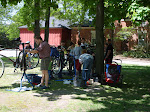
Giving new life to old bikes. Photo: Phyllis Tsang
HAMILTON—"This is the stage I like the most about fixing bikes,” Sid Slotegraaf, Coordinator of New Hope Bike Co-op and a soft-spoken downhill racer and dirt jumper, said while dusting off a "pre-loved" bicycle. "You don't always know how they would turn out. It's like giving them new lives again."
New Hope Bike Co-op, a program which focuses on helping people fix their own bikes—and providing low-cost parts, free use of tools and low-cost refurbished bicycles—is the brainchild of Jeff Neven, a cyclist and a father of four who can ride only once the kids are put to sleep.
The idea was born in 1997 when Jeff was working with inner city kids in Grand Rapids, Michigan, where he started a bicycle repair club for boys and girls. Upon returning to Canada, he continued to find opportunities and partner with groups like Recycle Cycles in Kitchener and MacCycle Co-op at McMaster University, serving communities with his bike repairing skills.
In the past three years, First Hamilton Christian Reformed Church and its church plant, New Hope Church, hosted a couple of single-day bike repairing events in East Hamilton. They had been well received by their neighborhoods. The success of these events furthered Jeff’s vision of developing a bike co-op in East Hamilton. This summer, New Hope Bike Co-op, backed by church donations and a grant from Service Canada’s Summer Job Initiative, finally became a reality.
The New Hope Bike Co-op. Photo: Phyllis Tsang
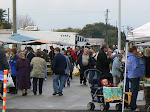
Since its opening in June, the bike co-op has been serving 20-40 people per day in two locations: a bike shop in the Delta East neighborhood which is open Thursdays and Fridays and a stall at Ottawa Street Farmer's Market on Saturday mornings.
The bike shop is located in an out-of-business sports bar which was originally an upscale eating establishment in the '40s. With most of its furniture still intact, the space has been retrofitted into a bike shop by adding workbenches, tools and increasing numbers of donated bicycles.
In this purple-ceilinged bike shop with a red-leathered booth, people's hands are always covered in black. According to Sid, "The best way to learn about bikes is to get your hands greasy and work on one."
"The greatest thing about this co-op for me is that people not only get their bikes fixed, but they also bring home a new skill,” he shared.
Some, like Darrell Sanderson, who donated time at the bike shop, walked home with more than a new skill. He left the co-op with a bike, his fingerprints all over it.
"You love being here, don't you?" asked Darrell's mom, Janice, who came to pick up her son after work. The shy teenager smiled and nodded.
The three bike stands in the shop never stand empty. Whenever a bike is off the stand, another one is put up. Both Sid and Drake White, a faithful volunteer who never misses a day at "work," are trying hard to meet the high demand for bicycles and repairs.
"This is our next project.” Sid picked a dusty cruiser out of more than 160 donated bikes.
Restored bikes are put at the store front to await their new owners. As much as sales are welcomed, they can be heart-breakers for Sid, who has to let them go, at times unwillingly.
Once, as he watched one of his beloved bikes leaving with a customer, Sid held out his arms like a child whose favorite toy had been taken away from him.
"That’s my bike..."
Originally a summer program, the Bike co-op will extend its operation on Saturdays through the winter. It will return in full strength again next summer at the same location (1429 Main St E).
"Are you ready to take part in this restoration project?" Sid looked at me and my clean hands as he mounted another forgotten gem on the stand.
Phyllis Tsang is a graduate student at McMaster University who likes to study wide, think deep, write lots, and live fully.
A version of this article originally appeared on the Media Co-op
Bike co-op gives life to old bikes
by Phyllis Tsang
The Dominion - http://www.dominionpaper.ca
Giving new life to old bikes. Photo: Phyllis Tsang
HAMILTON—"This is the stage I like the most about fixing bikes,” Sid Slotegraaf, Coordinator of New Hope Bike Co-op and a soft-spoken downhill racer and dirt jumper, said while dusting off a "pre-loved" bicycle. "You don't always know how they would turn out. It's like giving them new lives again."
New Hope Bike Co-op, a program which focuses on helping people fix their own bikes—and providing low-cost parts, free use of tools and low-cost refurbished bicycles—is the brainchild of Jeff Neven, a cyclist and a father of four who can ride only once the kids are put to sleep.
The idea was born in 1997 when Jeff was working with inner city kids in Grand Rapids, Michigan, where he started a bicycle repair club for boys and girls. Upon returning to Canada, he continued to find opportunities and partner with groups like Recycle Cycles in Kitchener and MacCycle Co-op at McMaster University, serving communities with his bike repairing skills.
In the past three years, First Hamilton Christian Reformed Church and its church plant, New Hope Church, hosted a couple of single-day bike repairing events in East Hamilton. They had been well received by their neighborhoods. The success of these events furthered Jeff’s vision of developing a bike co-op in East Hamilton. This summer, New Hope Bike Co-op, backed by church donations and a grant from Service Canada’s Summer Job Initiative, finally became a reality.
The New Hope Bike Co-op. Photo: Phyllis Tsang
Since its opening in June, the bike co-op has been serving 20-40 people per day in two locations: a bike shop in the Delta East neighborhood which is open Thursdays and Fridays and a stall at Ottawa Street Farmer's Market on Saturday mornings.
The bike shop is located in an out-of-business sports bar which was originally an upscale eating establishment in the '40s. With most of its furniture still intact, the space has been retrofitted into a bike shop by adding workbenches, tools and increasing numbers of donated bicycles.
In this purple-ceilinged bike shop with a red-leathered booth, people's hands are always covered in black. According to Sid, "The best way to learn about bikes is to get your hands greasy and work on one."
"The greatest thing about this co-op for me is that people not only get their bikes fixed, but they also bring home a new skill,” he shared.
Some, like Darrell Sanderson, who donated time at the bike shop, walked home with more than a new skill. He left the co-op with a bike, his fingerprints all over it.
"You love being here, don't you?" asked Darrell's mom, Janice, who came to pick up her son after work. The shy teenager smiled and nodded.
The three bike stands in the shop never stand empty. Whenever a bike is off the stand, another one is put up. Both Sid and Drake White, a faithful volunteer who never misses a day at "work," are trying hard to meet the high demand for bicycles and repairs.
"This is our next project.” Sid picked a dusty cruiser out of more than 160 donated bikes.
Restored bikes are put at the store front to await their new owners. As much as sales are welcomed, they can be heart-breakers for Sid, who has to let them go, at times unwillingly.
Once, as he watched one of his beloved bikes leaving with a customer, Sid held out his arms like a child whose favorite toy had been taken away from him.
"That’s my bike..."
Originally a summer program, the Bike co-op will extend its operation on Saturdays through the winter. It will return in full strength again next summer at the same location (1429 Main St E).
"Are you ready to take part in this restoration project?" Sid looked at me and my clean hands as he mounted another forgotten gem on the stand.
Phyllis Tsang is a graduate student at McMaster University who likes to study wide, think deep, write lots, and live fully.
A version of this article originally appeared on the Media Co-op
Friday, January 8, 2010
Faith groups, churches play important, continuing role in Hamilton
The following article was written in the Hamilton spectator as a response to someone wondering where the churches are in supporting the community:
- LettertotheEditor -
Annette Aquin
acting president and CEO
Hamilton Community Foundation
The Hamilton Spectator
(Dec 4, 2009)
Re: 'Where were churches at JPC event?' (Letters, Dec. 2)
We agree with the letter writer that the faith community has a vital role to play in creating a strong, prosperous community. In our experience, it is playing that role very well.
Within the neighbourhoods where Hamilton Community Foundation is focusing its poverty reduction effort, there is significant and growing leadership by a range of faith groups. We can point to the work of Christ's Church Cathedral in the development of the Jamesville Hub, the leadership of St. Giles Church in drawing together a variety of partners to build community in the south Sherman area, the work of Lightway Church in addressing poverty in Riverdale and of New Hope Church doing the same in Crown Point. These are just a few of the examples with which we are familiar.
Just like our local schools, libraries and recreation centres, faith organizations of all types are "anchor institutions" and assets in Hamilton's neighbourhoods. They have a unique and important contribution to building community, and are making that contribution. We have no doubt the faith community will continue to play its leadership role as citizens come together to make Hamilton the best place to raise a child.
- LettertotheEditor -
Annette Aquin
acting president and CEO
Hamilton Community Foundation
The Hamilton Spectator
(Dec 4, 2009)
Re: 'Where were churches at JPC event?' (Letters, Dec. 2)
We agree with the letter writer that the faith community has a vital role to play in creating a strong, prosperous community. In our experience, it is playing that role very well.
Within the neighbourhoods where Hamilton Community Foundation is focusing its poverty reduction effort, there is significant and growing leadership by a range of faith groups. We can point to the work of Christ's Church Cathedral in the development of the Jamesville Hub, the leadership of St. Giles Church in drawing together a variety of partners to build community in the south Sherman area, the work of Lightway Church in addressing poverty in Riverdale and of New Hope Church doing the same in Crown Point. These are just a few of the examples with which we are familiar.
Just like our local schools, libraries and recreation centres, faith organizations of all types are "anchor institutions" and assets in Hamilton's neighbourhoods. They have a unique and important contribution to building community, and are making that contribution. We have no doubt the faith community will continue to play its leadership role as citizens come together to make Hamilton the best place to raise a child.
Monday, November 2, 2009
Relationship not religion
Recently I attended a conference where Paul Young, author of 'The Shack', spoke about the story behind the shack. First, let me say if you haven't read the book, I would encourage you to do so. I want to share with you some of what he shared because I was captivated with his journey of learning about what it means to be a Christian, or a follower of Christ...or whatever you would call it. That is, that God is a God of and in relationship, and is calling us to be in a relationship with Him (Father, Son and Spirit). That relationship is one of mutuality where we come to see ourselves as deeply loved. By virtue of being a Tri-une God (Trinity of Father, Son and Spirit), God achieves mutuality of relationship and by being and doing so, validates relationship and love. As Jesus lived and was fully human he was dependent on the relationship with the Father and the Holy Spirit. Jesus' cry on the cross 'My God, my God, why have your forsaken me - is our cry - he feels our pain and offers up our cries to the Father. He was not forsaken, but ended with a statement of trust in the Father when he commits his spirit. Most of our lives we may not sense the presence of the Father - it takes process, a journey of seeing ourselves in a loving relationship in which the the Holy Spirit is always with us with 'shameless non-condemnation'. Know that God is with you, His image is in you and you are a unique person that matters. That's why you have been invited into a relationship of love and trust with God the Father, Son and Spirit - to experience a mutuality of love.
Tuesday, April 21, 2009
Hot Baptism
You can bet that this passed Sunday the angels were a-singin' and the 'saints' were cheering when they saw our sister Merle get baptized, and while both her and her husband professed their faith and became 'members' of New Hope. Talk about the highs and lows of life! Ask members of New Hope what the last couple of months, even half a year (if not more) has been like, and they will say its been the 'highest of highs and the lowest of lows'. We are continuing to feel the tension as a body of New Hope as we work through how to love each other, support and encourage one another, and communicate with each other, when we have different ideas and hopes for our community, different experiences that filter our expectations, and different giftings. And believe me, it hurts. At the same time, we laugh with our friend Calvin at his awesome sense of humour. We enjoy the bonds created in our small groups, the fun we have in our community events and the collaboration we establish working alongside of each other picking up garbage to clean up our streets. And we get to celebrate the work that God is doing in our lives, particularly this Sunday, what he has done in Merle's life. Merle shared her story of how God has been at work in her life to bring her closer to Him as his child, and so we celebrated this through her baptism. As Merle puts it, although she wandered, he never let her wander too far. There has got to be no more of a unique and simply beautiful way of getting baptized, then in a hot tub! And so, 50 plus people crammed into Merle's home to celebrate her baptism with her family. Faces plastered up against the windows of the small hot tub room, a few children were able to fit inside to watch, cameras capturing highlights of the celebration to be used as a continual reminder of God's love. As Merle was brought under the water in the name of the Father, Son and Spirit, and up again, we were reminded of how God calls his children to die to our hurtful, selfish and broken lives (symbolized by going under the water) so that we can be made clean and forgiven - made new (symbolized by coming up out of the water) to have life together with God, forever. Thanks Merle for sharing this day with us, and for singing from your heart about giving your everything to Christ! (Oh, and for being soooo steamy after you came out of the water that we could visually imagine the Spirit alive and radiating from you! :) )
Saturday, March 21, 2009
Naming and Unmasking the Powers
I will do my best to share some of the key ideas I heard today at a conference regarding the 'powers and principalities' that scripture talks about existing in our world. Something quite new to my limited or even misguided understanding of the scope of what these scripture passages are really refering to....as our "fight is not against man, but against the powers and principalities"...which I, and I think others, have made into the idea of little (or big) demons that exist in people. What I will share next are ideas and thoughts shared by 3 key speakers: Walter Wink, Stanley Hauerwas and Marva Dawn.
First, there are spiritual realities at the core of institutional life; in government, corporations, schools, churches, our systems and structures. We need to see these institutions as both evil and good at the same time and social change is what happens when we unmask the powers of evil in our systems - ie, unjust systems that perpetuate violence. "Transformation takes place within the limits of the fallen". We recognize that we as individuals are fallen people, so too are our institutions. It is not just a matter of casting out demons, because evil is profoundly systemic, and runs deeper than existing in just one person, or peoples. The best way for us to understand our institutions and structures is to see them as good, fallen and redeemable all at the same time. We ought not to demonize someone who is doing evil if at the same time we are to see them as good, bad and redeemable all at the same time.
So how do we confront and unmask these powers and principalities that are evil or demonic? By dying. We must die to what has killed us; oppression, abuse, injustice, domination, power and control - die to social entities in order to live authentically. Personal redemption cannot take place without the redemption of our social structures, so we must set out to liberate powers - calling them back to what their created intention was to be, in order that there may be universal restitution of all things. The gospel is not just a salvation of individuals from the world, but a world transfigured. -Walter Wink
To get rid of war, we need a moral substitution for it. Unfortunately, war is a force that gives us meaning, purpose, reason and meaning for living. War gives us a cause and allows us to be noble. War makes the world coherent by creating black and white, us and them. War enables us to create a unified story and binds us together as a nation or people group. To preserve the humanity of those we are killing, we dehumanize them and the act itself. War is violent and counter to the gospel that calls us to be at peace with each other and God. But, do we have an alternative? According to Hauerwas, the church is that alternative. (As discussion ensued, others talked further about the chuch's ability to show solidarity with the poor as a moral practice that is an alternative to war. It is in our ability to see ourselves as forgiven and broken people -even though we are often in the position of power - that we can demonstrate the radical practice of forgiveness, not violence, as our response). War demands sacrifice - sacrificing our moral unwillingess to kill. Since Christ paid the ultimate sacrifice, we no longer need a sacrifice. - Stanley Hauerwas
Only by grace can we face the 'powers and principalities'. Ephesians 6. It doesn't say fight the powers, it just says, stand against the powers. (What sense does it make to overcome evil by doing evil - violence?). Churches can be these principalities that are fallen and we need to expose or be exposed when we act in a fallen way, ie., attracting people through our worship. Yet there is hope. The reason we can stand against the "powers and principalities" is because we know we already have victory. God has already defeated the evil in our institutions, structures and systems when Christ defeated them on the cross. God calls us to a universal work of bringing shalom in the world. We have a place in the greater meta-narrative of His redeeming work in the world. That place is to stand against the methods of the Powers and Principalities - our struggle is not against persons. We need to understand that the "rulers and authorities" that scripture talks about are human institutions that can become fallen and act like demonic forces. We don't really know the essence of these powers - scripture does not speak into that. Nor do we need to know. But we do need to know how they work - signs of corrupt institutions and systems; injustice, greed, (a business does not exist to make money, that is a means to the end...that of giving back to the larger community - Wink). We are to be peace makers, with armour that defends us and gives us authority to stand against these powers, for the battle has already been won! (read Ephesians 6 and dwell on the armour that we are given). - Marva Dawn
First, there are spiritual realities at the core of institutional life; in government, corporations, schools, churches, our systems and structures. We need to see these institutions as both evil and good at the same time and social change is what happens when we unmask the powers of evil in our systems - ie, unjust systems that perpetuate violence. "Transformation takes place within the limits of the fallen". We recognize that we as individuals are fallen people, so too are our institutions. It is not just a matter of casting out demons, because evil is profoundly systemic, and runs deeper than existing in just one person, or peoples. The best way for us to understand our institutions and structures is to see them as good, fallen and redeemable all at the same time. We ought not to demonize someone who is doing evil if at the same time we are to see them as good, bad and redeemable all at the same time.
So how do we confront and unmask these powers and principalities that are evil or demonic? By dying. We must die to what has killed us; oppression, abuse, injustice, domination, power and control - die to social entities in order to live authentically. Personal redemption cannot take place without the redemption of our social structures, so we must set out to liberate powers - calling them back to what their created intention was to be, in order that there may be universal restitution of all things. The gospel is not just a salvation of individuals from the world, but a world transfigured. -Walter Wink
To get rid of war, we need a moral substitution for it. Unfortunately, war is a force that gives us meaning, purpose, reason and meaning for living. War gives us a cause and allows us to be noble. War makes the world coherent by creating black and white, us and them. War enables us to create a unified story and binds us together as a nation or people group. To preserve the humanity of those we are killing, we dehumanize them and the act itself. War is violent and counter to the gospel that calls us to be at peace with each other and God. But, do we have an alternative? According to Hauerwas, the church is that alternative. (As discussion ensued, others talked further about the chuch's ability to show solidarity with the poor as a moral practice that is an alternative to war. It is in our ability to see ourselves as forgiven and broken people -even though we are often in the position of power - that we can demonstrate the radical practice of forgiveness, not violence, as our response). War demands sacrifice - sacrificing our moral unwillingess to kill. Since Christ paid the ultimate sacrifice, we no longer need a sacrifice. - Stanley Hauerwas
Only by grace can we face the 'powers and principalities'. Ephesians 6. It doesn't say fight the powers, it just says, stand against the powers. (What sense does it make to overcome evil by doing evil - violence?). Churches can be these principalities that are fallen and we need to expose or be exposed when we act in a fallen way, ie., attracting people through our worship. Yet there is hope. The reason we can stand against the "powers and principalities" is because we know we already have victory. God has already defeated the evil in our institutions, structures and systems when Christ defeated them on the cross. God calls us to a universal work of bringing shalom in the world. We have a place in the greater meta-narrative of His redeeming work in the world. That place is to stand against the methods of the Powers and Principalities - our struggle is not against persons. We need to understand that the "rulers and authorities" that scripture talks about are human institutions that can become fallen and act like demonic forces. We don't really know the essence of these powers - scripture does not speak into that. Nor do we need to know. But we do need to know how they work - signs of corrupt institutions and systems; injustice, greed, (a business does not exist to make money, that is a means to the end...that of giving back to the larger community - Wink). We are to be peace makers, with armour that defends us and gives us authority to stand against these powers, for the battle has already been won! (read Ephesians 6 and dwell on the armour that we are given). - Marva Dawn
Sunday, March 8, 2009
A look at Hamilton
Subscribe to:
Posts (Atom)